Have you ever thought about how a product or experience can stir emotions and generate memories for people? Some companies care more about selling the value of customers’ experiences rather than just goods and services– and the experience economy is exactly that.
There are different stages of the experience economy (commodity, product, service, and experience). Commodities are the earliest stage focused on raw materials, goods are the next stage that turn commodities into real products, services are the goods delivered to the customer, and experiences are what create long-lasting memories for a guest or customer. When you apply this to a specific brand, what does this look like?

Take Disney World as an example. Their slogan is “the most magical place on earth” as this is what they aim to create for families when they are on vacation. What do they need in order to make this happen? For commodities they need the land it is built on, electricity to keep everything running, ingredients (whether it is for merchandise or food), and more. For products, they need souvenirs, merchandise (like Mickey ears or pins), food, etc. For service, they obviously need cast members who help everything run (like Photopass photographers who take pictures of families and guest relations to help guests solve their issues). For the experience stage, the most important part, it is all about transforming families’ park visits into unforgettable memories. This includes watching the Happily Ever After fireworks show at Magic Kingdom or going to the Bibbidi BobbIdi Boutique to make girls feel like a princess. Each experience is designed for their guests to feel like they are escaping the real world and being immersed in the magic.

Something that makes the experience so magical at Walt Disney World is the design of the architecture. Every building whether you are in one of the parks or a hotel makes you feel that escape from reality. One good example is Toy Story Land at Hollywood Studios. To make you feel like you are in Andy’s playroom, this whole part of the park is designed with what look like building blocks and everything around you is enlarged to make you feel that you have shrunk and that you are one of the toys.
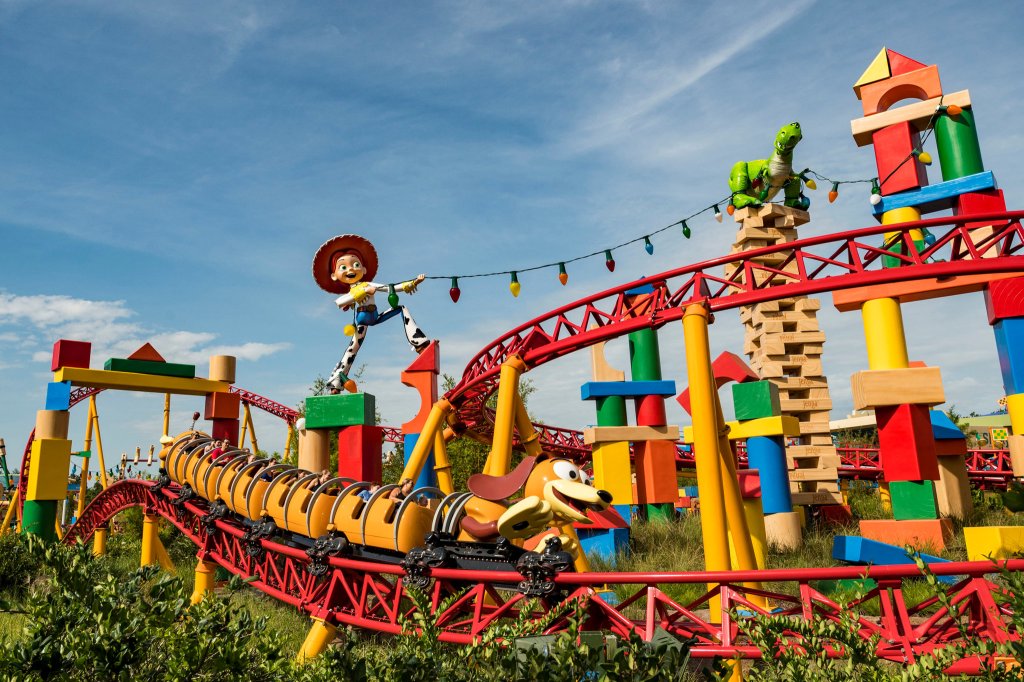
Another important element of the design of the land is the colors. For Toy Story Land, Disney incorporates cheerful, bright colors like red, yellow, orange and blue to spark guests’ imagination as well as give them feelings of joy and nostalgia that comes along with the Toy Story movie. The color palette they use is not random– it is a part of Disney’s emotional storytelling.
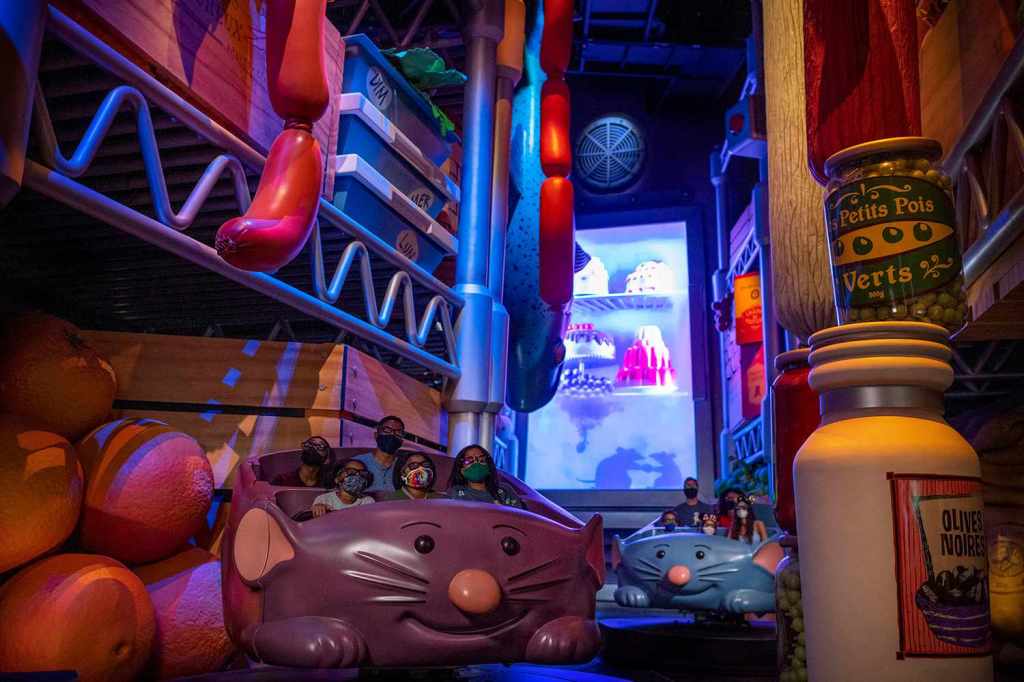
In terms of how they make a map as an emotional journey map they also do this in Epcot’s France Pavilion. A lot of the architecture is made to look and make you feel like you are in France along with the smells it comes along with (the smell of crepes and French food at their restaurant). Also when you go the part of France where the Ratatouille ride is, the ride also makes you feel that you are a part of the movie as one of the rats. When waiting to get on to the ride, there are sounds and music from the movie to get your imagination flowing and immerse you into the world of Ratatouille. When you get on the ride, you get into one of the rodent carts (Remy or Emile) and you are then taken in the perspective as a rat trying to steal food from Gusteau’s kitchen.
When on “Remy’s Ratatouille Adventure,” you get positive and negative emotions. One minute of the ride you are running from chefs and fire to make you feel nervous and the next minute, you are smelling all the good food that Remy and his friends are eating in the kitchen. Stories without conflict are dull but by including these elements in the ride, this is what makes great storytelling as it takes you on an emotional journey.
While you might not realize it, all of these elements that are a part of the experience economy are what help create the memories you make wherever you go. Disney connects design with memory turning ordinary interactions into emotional connections. This is how design adds value and why it is so important.
 Emilie Ackerman
Leave a comment